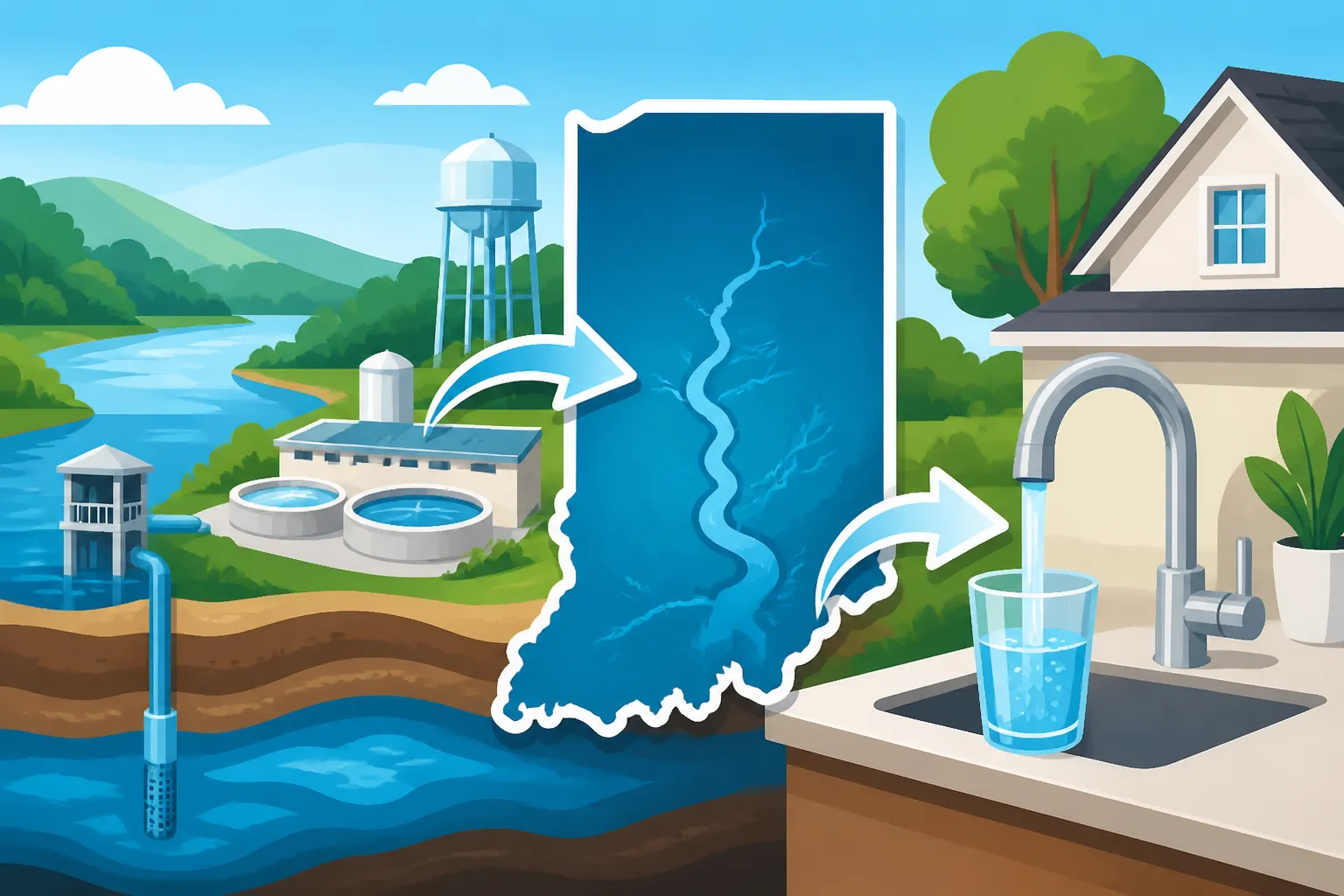
Where Your Indiana Tap Water Comes From: A Homeowner’s Guide
If you have moved, noticed a change in taste, or simply want to know what comes out of your faucet, “Indiana tap water” is not a single source. Your home may be served by a utility using groundwater, surface water, or water supplied by another system. This guide explains how to identify your provider and verify your local source and water-quality information.
The route from a water source to your faucet
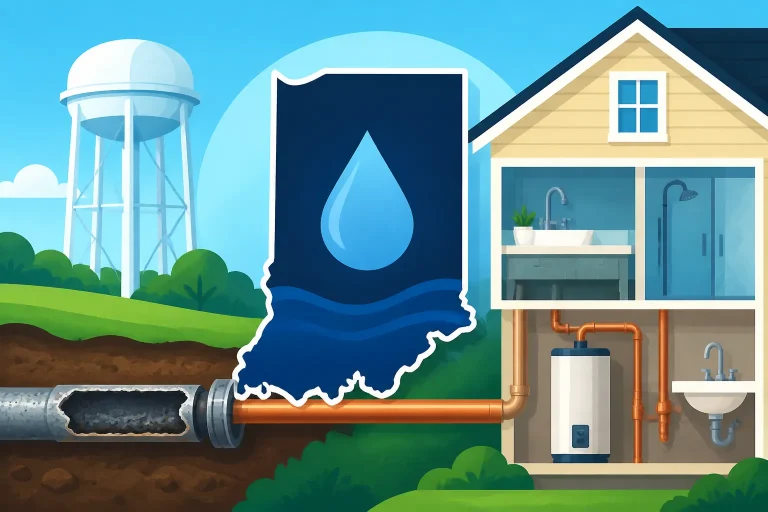
Tap water usually follows a chain: a water source, a system that collects or receives the water, treatment, distribution pipes, and the plumbing inside your home. Finding the source is useful, but it answers only one part of the question. You may also want to know who treats the water, where testing results are published, and whether a problem could be in the public system or your own plumbing.
Water sources are commonly grouped into two broad categories:
- Groundwater is drawn from below the ground, typically through a well.
- Surface water comes from a body of water such as a river, lake, or reservoir.
A water supply can also combine sources or change which source it uses. The source at the beginning of the chain is not necessarily the water’s only stop. For example, a system may treat water before it enters the distribution network, or receive water from another provider. The source, treatment, and provider are separate details to confirm rather than assume.
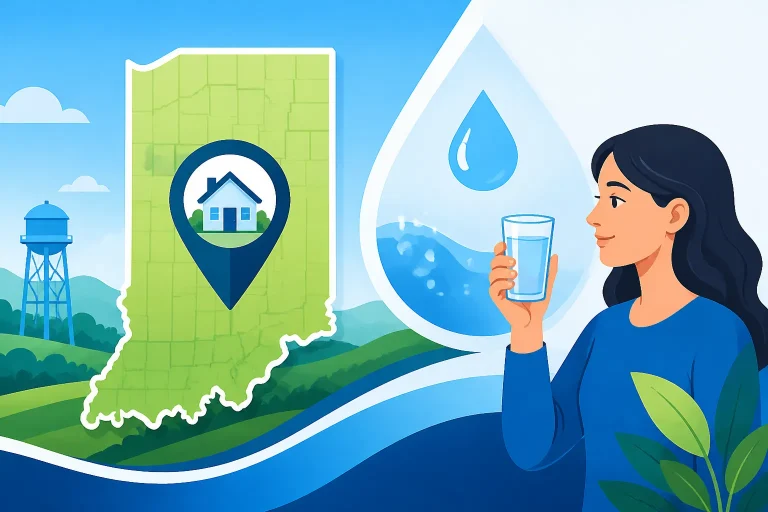
Your service area matters, too. A town name or mailing address does not always identify the water provider. A nearby home may be served by a different system, and a utility’s name may not match the place name residents use in conversation. Start by checking a recent water bill, asking a landlord or property manager, or looking up the address using official state information.
If you are not sure whether your home is connected to a public system or uses a private well, begin with City Water or a Private Well? How to Tell What Your Indiana Home Uses. That distinction changes where to look for information and who to contact. A public-system report cannot tell you what is happening in a private well, and a well’s results do not describe the water delivered by a neighboring utility.
For an overview of the source types that can serve public systems in Indiana, see Wells, Rivers, Reservoirs or a Blend: Indiana’s Public Water Sources. The practical takeaway is simple: learn the name of the system serving your address, then verify its source and treatment using information for that system—not assumptions based on the nearest river, lake, or town boundary.
Groundwater, surface water, and supplies that use more than one source
Groundwater and surface water can differ in how they are collected and treated, but the label alone does not tell you whether water is suitable for a particular household concern. Source water is water before or as it enters treatment. The water that reaches your faucet has also passed through the system’s treatment and distribution process, and may be affected by plumbing inside the building.
What groundwater tells you—and what it does not
A groundwater source is associated with a well, but the word “well” does not tell you the water’s exact composition. Conditions vary from place to place, and water can also interact with treatment equipment and plumbing after it is collected.
A public system’s well is different from a private well at a home. If your address is served by a public system, the provider manages the supply and publishes public-system information. If your home uses its own well, you need information and testing relevant to that well. Private Wells in Indiana: A Guide to the Water You Manage Yourself covers that separate situation.
A well’s source location can help explain why a system uses particular treatment, but a source label is not a substitute for sampling results. To understand what has actually been tested, look for the utility’s report and state database information. If you want to investigate water quality at your own faucet, system-wide results may not settle the question; Sampling Your Own Tap to Check What Indiana Home Plumbing Adds explains why a home sample can answer a different question.
What surface water tells you—and what it does not
Surface water comes from above-ground sources. Its quality can vary with local conditions, so treatment is an important part of the process. Knowing that a system uses a river, lake, or reservoir does not tell you what treatment it applies or what recent sampling found. Those are separate details to check.
It is also easy to infer too much from geography. A home near a river does not necessarily receive river water. The utility may draw from another source, buy treated water, or use a mix. Check the system’s source information instead of assuming that the closest body of water supplies the tap.
If a system uses more than one source, or changes its source under certain operating conditions, the source you see in a summary may need more context. Ask the utility which source or sources serve your area and whether the source can vary. Does Your Tap Water Source Switch by Season in a Multi-Source System? offers more detail on that question.
When one provider supplies another
The company or municipality that sends a bill may not be the organization that collects and treats the original water. Some public systems receive water from another provider. In that case, the service relationship and the water’s original source are related, but not identical.
When you check records, look for both the system serving the property and the source listed for that system. If you cannot tell whether the supply is purchased or locally produced, ask the provider who treats the water and where its source information is recorded. The question is especially useful when a town’s report names a source that appears to be outside its boundaries.
For more on this arrangement, see Does Your Indiana Town Buy Its Water From a Neighboring Utility?. The key is to follow the supply chain rather than stop at the name on the bill.
Public water systems and the system serving your address
Indiana public water systems vary widely. According to the Indiana Department of Environmental Management, they range from small businesses with their own wells to large utilities providing water to entire cities. That range is one reason a system’s name and service area are worth checking directly.
According to the Indiana Department of Environmental Management, community water supplies have at least 15 service connections or serve 25 or more people year-round. Those criteria describe a type of public water supply; they do not identify which provider serves a particular home.
A system’s classification can help you understand what kind of service it provides, but it does not answer every practical question. A homeowner generally needs to know:
- Which public water supply serves the address.
- Whether the supply uses groundwater, surface water, or more than one source.
- What treatment the system uses.
- Where to find sampling results and consumer reports.
- Who to contact with an address-specific question.
A utility may serve only a defined area, while a nearby provider serves a different area. The boundary is not always obvious from a map, a street name, or a city limit. If you are renting, the landlord or property manager may know which system serves the building. If the property has a water bill, check the provider name shown there. For a shared or master-metered building, ask the property manager rather than assuming the provider from a neighbor’s bill.
If you are unsure which utility serves your home, Not Sure Which Indiana Utility Serves You? Find It and Its Fluoride can help with the lookup process. The fluoride information in that title is only one possible reason to identify the provider; the same first step helps with source, treatment, and reports.
A public supply’s records describe the system, not necessarily every detail of water at an individual faucet. Water travels through distribution lines and the building’s own plumbing before it reaches you. A system-wide report is useful for understanding the provider’s source and monitoring, but it is not a tap test for your particular kitchen sink. See Does a System-Wide Report Describe the Water at Your Own Indiana Tap? for that distinction.
How to find your local source and provider information
Indiana has state resources that can help you move from a general question to information about a specific public water supply. Two useful starting points are the Indiana Public Water Supply Database and IDEM’s Drinking Water Viewer.
The Indiana Department of Health says the Indiana Public Water Supply Database provides information on source water, treatment, population served, names and addresses, and results of the most recent chemical and bacteriological testing conducted. The database can help you connect a supply’s identity with its source, treatment, and reported testing information.
The Indiana Department of Environmental Management says its Drinking Water Viewer provides information about where your water comes from, sampling results, and who to contact. Use the viewer to identify the system and explore the available information tied to it.
These tools are related, but they may present information differently. If a search result is unclear, compare the system name with your bill or other provider records. Make sure you have selected the system serving the right address; choosing a system with a similar name can lead you to the wrong report.
A useful search sequence is:
- Identify the provider shown on your water bill, lease information, or property records.
- Search the state database or viewer for that provider or public water supply.
- Check that the system’s name and service area match your home.
- Review the source and treatment information separately from the sampling results.
- Note the listed contact person or provider contact route if you need clarification.
If you cannot find the system using an address, try the provider name or a nearby public water supply name, then confirm the match with the utility. A missing or confusing search result does not prove that the property has no public water service. The system name may differ from the local name you expect, or the address may be recorded under a broader service area.
For a more detailed walkthrough of state records, see Indiana’s Drinking Water Viewer vs. the Public Water Supply Database. If the source line in the record is hard to interpret, Surface Water or Groundwater? Finding the Source Line in Your Report can help you focus on the relevant entry. For ways to locate a report beyond the database, see Finding Current Water Quality Information for Your Indiana Address.
Reading source information alongside treatment and water-quality results
A source description is a starting point, not a complete assessment of the water delivered to your home. Read it alongside treatment information, sampling results, and the utility’s annual consumer report. Each answers a different question.
| Information to check | What it helps answer | What it does not establish by itself |
|---|---|---|
| Source water | Where the system gets its water | The condition of water at your individual faucet |
| Treatment employed | How the system processes the supply | Whether a particular home plumbing issue is present |
| Sampling results | What was measured at the reported sampling points | What every tap in the service area contains |
| Population served and system name | Which public supply the record describes | Whether that system serves your exact address |
| Utility contact information | Where to ask a system-specific question | Whether a home sample is needed |
The Indiana Department of Health describes the database as including source water, treatment, population served, pertinent names and addresses, and results of the most recent chemical and bacteriological testing conducted. Those details are useful together: the source identifies the upstream supply, the treatment entry describes the system’s process, and the results show what was sampled and reported.
Sampling results should be read with their context. Check which system they belong to, what was sampled, and whether the result is from a utility monitoring point or a sample at a customer’s tap. A system result does not automatically establish conditions inside a specific home. If the issue is a suspected plumbing contribution, a sample collected at the property may be more relevant. System Sampling Sites vs. Your Kitchen Faucet: Where Utilities Test explains how those sampling locations differ.
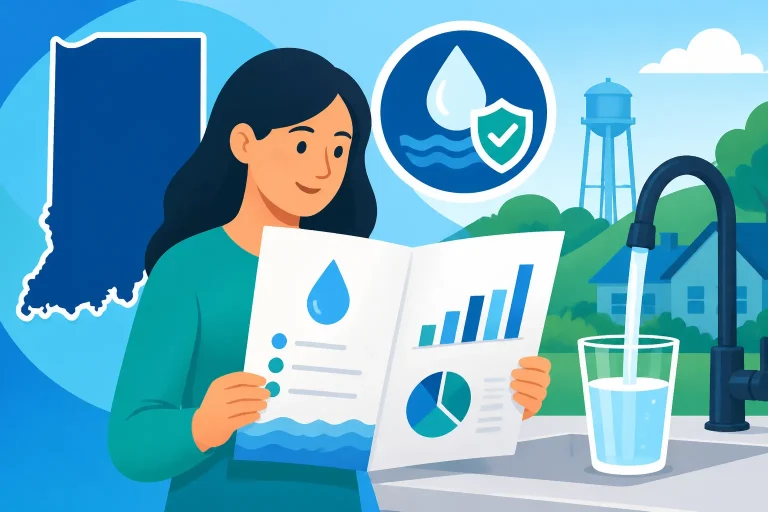
The annual consumer confidence report, often called a water quality report, is another important source. It summarizes information for the public supply, but its reporting period may not be the same as the date you open the report. Check the report’s coverage period and the details of any listed detection or violation rather than assuming the report describes a sample collected that day. See Indiana Consumer Confidence Reports: How to Find and Read Yours and Which Year Does an Indiana Water Quality Report Actually Cover?.
A result appearing in a report does not necessarily mean a standard was exceeded. The report’s table, units, monitoring notes, and any explanation from the utility all matter. If a row is difficult to interpret, compare it with the report’s definitions and ask the provider what the result means for the system. Detected Substances in an Annual Water Report: How the Table Is Built gives more context on how those entries are presented.
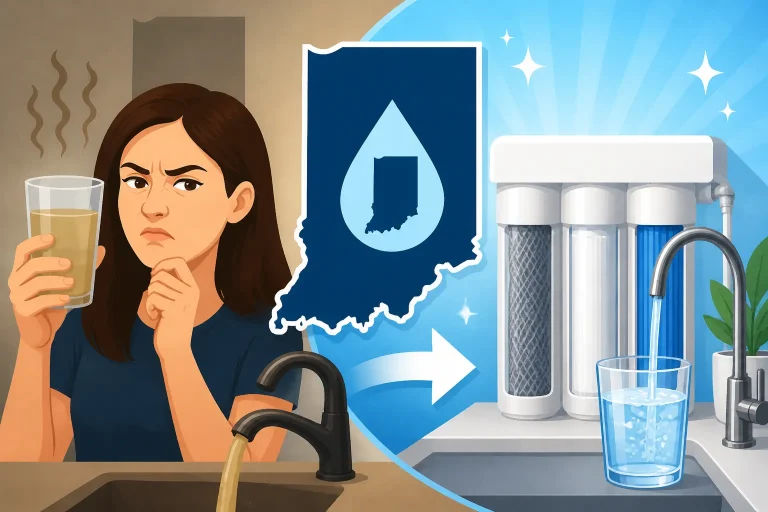
Use the report to understand the system, not to diagnose a problem based on taste, smell, or color alone. Changes in appearance or taste can have more than one cause, including conditions in a building’s plumbing or work in the distribution system. If your water changes suddenly, first check for a utility notice and contact the provider if the cause is not clear. Taste, Odor and Color Problems in Indiana Tap Water: Where to Start covers practical next steps.
Why the source can matter at home—and where its limits are
Knowing the source can make a water-quality question easier to investigate. It helps you ask a more useful question of the utility and locate the right system records. But source information alone cannot tell you whether you need treatment, whether a particular contaminant is present at your faucet, or whether a taste change is a sign of a problem.
Source is not the same as water quality at the tap
Source water is only one part of the route. Treatment can change water characteristics, and distribution lines and household plumbing can also affect what arrives at a fixture. A system may report results from monitoring locations that are not your kitchen tap. For that reason, a source listing and a utility-wide report should not be treated as a guarantee about every fixture.
If a concern involves a particular home, consider what evidence would answer it. A question about which provider serves an address calls for a service-area lookup. A question about what a utility monitors calls for its report or sampling records. A question about water from one faucet may call for a properly collected sample at that faucet. Match the information source to the question.
A taste or appearance change does not identify the source
A new taste, odor, or color can prompt understandable concern, but those signs do not identify the original water source or explain the cause on their own. Check whether the change appears at one faucet or throughout the home. Ask neighbors whether they have noticed it, and check the utility’s notices for work or service interruptions. Then contact the utility if the change is widespread or unexplained.
If the issue appears only at one fixture, the cause may be closer to that fixture than the water source. The utility can help determine whether a reported issue is system-wide, but it may not be able to diagnose home plumbing remotely. For a step-by-step way to separate the two possibilities, see Utility Problem or Your Own Plumbing? How Indiana Homeowners Can Tell.
Do not assume boiling or buying a filter is the right response to every change. The appropriate action depends on the concern and any current instruction from the utility. If an advisory is in effect, follow the notice and verify that it covers your address. Boil-Water Notices and Outages: An Indiana Household Guide explains how to respond to an advisory.
A source lookup is not a treatment recommendation
Knowing that a supply uses a well or surface water does not establish that your home needs a filter, softener, or other treatment. Treatment decisions should be based on a defined concern and relevant results, not on a source label alone. A product may be designed or certified to reduce particular substances, but that does not mean it is suitable for every source or every result.
If you are considering home treatment, identify the exact issue first and compare the product’s certified claims with the water test or utility information you have. The system should address the specific concern, and its maintenance requirements matter. Getting Started With Water Filters and Softeners in Indiana offers a practical overview of the test-first approach.
Questions to ask your water provider
Once you have found the provider, direct questions can fill gaps that a database entry or annual report may leave. Ask for information tied to your address or service area, and be clear about whether you are asking about the system’s source, its treatment, a sampling result, or a change at a particular faucet.
Useful questions include:
- Which public water supply serves this address?
- What source or sources supply that system?
- Does the system receive water from another provider?
- Can the source serving this area change?
- What treatment is used before the water enters distribution?
- Where can I find the latest consumer confidence report and sampling information?
- Are the results listed for system monitoring points, customer taps, or both?
- Who should I contact about a recent change in taste, odor, color, or pressure?
- Is there a current notice or advisory that applies to this address?
If a representative gives you a system name that differs from what you found online, ask how the names are connected. The utility may use a formal public water supply name that is not the same as its familiar local name. If a record lists a contact person, confirm that the contact is still the right route for your question.
For a specific concern about a contaminant or a result, ask what the sampling location and date refer to, and whether the result is from the utility’s regular monitoring or a sample collected at a customer’s tap. If you want a home sample, ask which sampling method and laboratory are appropriate for the question. Collecting a sample incorrectly can make the result less useful, so follow the laboratory’s instructions.
The Indiana Department of Environmental Management’s Drinking Water Viewer can help identify where your water comes from, sampling results, and who to contact. The Indiana Public Water Supply Database can provide source, treatment, population served, system contacts, and recent testing information, according to the Indiana Department of Health. If those records do not answer an address-specific question, contact the water provider through its official website.
For concerns that seem connected to household plumbing, tell the provider what you observe and where. If the utility finds no system-wide issue, that does not by itself prove that the home’s plumbing is responsible; it means the next question may require home-specific investigation. The distinction helps avoid treating a system report as a diagnosis of a single building.
Frequently Asked Questions
Can I tell my water source from my town name?
Not reliably. A town can have more than one service area, and a nearby home may be served by another system. Confirm the provider for your address, then check that system’s source information.
Does a groundwater listing mean my water has not been treated?
No. Source and treatment are separate entries. Check the system’s treatment information as well as its source listing.
Does a utility report describe the water at my faucet?
It describes information reported for the public water supply, but it may not represent a sample from your particular faucet. Home plumbing can add a separate factor, so match the sampling location to your question.
What if I cannot find my provider in the state tools?
Try the name on your water bill or ask the landlord or property manager. You can also contact the provider and ask which public water supply serves the property. Use the provider’s official website for current contact details.
Should I buy a filter because my system uses a well or surface water?
Not on that information alone. First identify the concern and review relevant test results. If you consider treatment, check that the product is certified or designed for that specific concern and that its upkeep is practical.
Sources
- Indiana Department of Health — Environmental Public Health: Water Supply Information (checked November 13, 2026)
- Indiana Department of Health — Environmental Public Health: Water Supply Information (checked November 13, 2026)
- Indiana Department of Environmental Management — Water Quality in Indiana: Understanding and Protecting Your Drinking Water (checked November 13, 2026)
- Indiana Department of Environmental Management — Water Quality in Indiana: Drinking Water (checked November 13, 2026)
Disclaimer
This article is for general informational purposes only and does not constitute professional advice. Laws, prices and regulations vary by location and change over time. Consult a qualified professional for guidance on your specific situation. Indiana Water Guide is not a government agency or water utility and is not affiliated with any public water system.